
Football Analysis: Καζάν-Παναθηναϊκός

Με τη βοήθεια του Michael Cox και της Zonal Marking, το Sport24.gr αναλύει και σήμερα τον αγώνα του Παναθηναϊκού στο Τσάμπιονς Λιγκ, αποδεικνύοντας γιατί το 0-0 ήταν το πιο φυσιολογικό αποτέλεσμα στο Καζάν
Ο Παναθηναϊκός και η Ρουμπίν Καζάν ολοκλήρωσαν άλλο ένα στείρο 0-0, σε ένα παιχνίδι που καμία από τις δύο ομάδας δεν άξιζε τελικά να πάρει τους 3 βαθμούς.
Η Ρουμπίν κράτησε τη βασική διάταξη με τις δύο τετράδες σε άμυνα και επίθεση, χρησιμοποιώντας τον Κάρλος Εντουάρντο στο ρόλο του να βοηθάει τον Σεργκέι Κορνιλένκο μπροστά. Με αυτό το αγωνιστικό πλάνο, ο Γκοκντενίζ Καραντενίζ δεν βρήκε χώρο στην βασική εντεκάδα, παρόλο που στο ματς του ΟΑΚΑ δημιούργησε αρκετά προβλήματα στον Παναθηναικό. Ο δαιμόνιος Αλάν Κασάεβ, ξεκίνησε από το αριστερό «φτερό» της μεσαίας γραμμής.
Ο Νίκος Νιόπλιας από την άλλη, άλλαξε άρδην τη διάταξη του Παναθηναικού. Ο Κώστας Κατσουράνης χρησιμοποιήθηκε σε πιο αμυντικό ρόλο, κατ’ ουσία σαν τρίτος στόπερ ανάμεσα στους Καντέ και Μπουμσόνγκ. Αυτό άλλαξε και λίγο τον ρόλο των ακραίων μπακ, τα οποία με την τριάδα των στόπερ να γεμίζει την περιοχή, είχαν ρόλο να προωθούν το παιχνίδι από τις πτέρυγες και να συνεπικουρούν τους Καραγκούνη και Γκαρθία που όμως περισσότερο γέμιζαν τους χώρους κοντά στον άξονα, παρά αναπτύσσονταν από τα άκρα.
Εξαφανισμένο, αλλά … ενδιαφέρον!
Ήταν αρκετά ενδιαφέρουσα η διάταξη του Παναθηναικού με τους τρεις πίσω, καθώς είναι κάτι που έχει σχεδόν εξαφανιστεί στο ευρωπαικό ποδόσφαιρο. Με την εγκαθίδρυση συστημάτων με ένα κεντρικό επιθετικό αντί για δύο, είτε μιλάμε για 4-5-1, 4-3-3 (4-2-3-1), η ανάγκη για 3 κεντρικούς αμυντικούς έχει υποχωρήσει.
Δηλαδή, το σύστημα του Παναθηναϊκού με τους 3 πίσω, έδινε ισχυρό πλεονέκτημα αμυντικά απέναντι στον ένα μόνο προωθημένο της Ρουμπίν, αλλά ταυτόχρονα στερούσε τον έξτρα παίκτη από άλλους χώρους στο γήπεδο που ο Παναθηναικός χρειαζόταν για να μπορέσει να αναπτυχθεί.
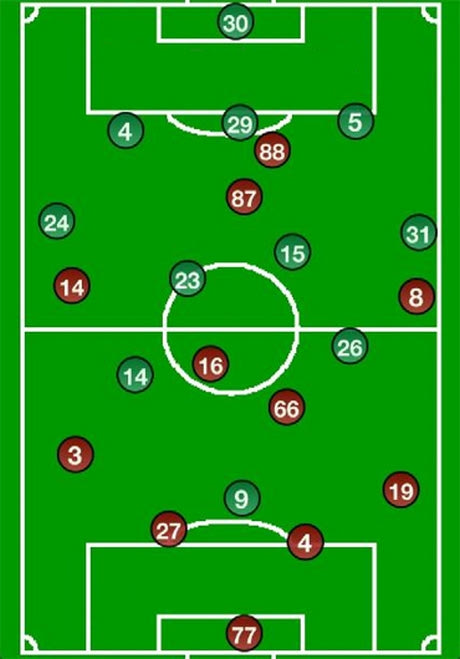
Έτσι έπαιξαν Καζάν και ΠΑΟ. Οι συνθέσεις για να καταλάβετε το γράφημα:
RUBIN KAZAN: 77 Rhyzikov, 19 Kaleshin, 4 Navas, 27 Bochetti, 3 Ansaldi; 66 Natcho, 16 Noboa; 8 Ryzantsev, 14 Kasaev; 87 Eduardo, 88 Kornilenko.
PANATHINAIKOS: 30 Tzorvas; 4 Boumsong, 5 Kante, 29 Katsouranis; 24 Vyntra; 23 Simao, 15 Gilberto, 31 Spyropoulos; 14 Garcia, 26 Karagounis, 9 Cisse.
Η χρησιμοποίηση 3 αμυντικών συστήνεται περισσότερο σε ειδικές περιπτώσεις. Ο Όττο Ρεχάγκελ ήταν ένας προπονητής που του άρεσε να έχει πάντα ένα έξτρα αμυντικό, σε αντιστοιχία με τους αντίπαλους επιθετικούς. Απέναντι σε 2 επιθετικούς, του άρεσε να χρησιμοποιεί 3 αμυντικούς και απέναντι σε σύστημα με έναν φορ, 2 κεντρικούς αμυντικούς. Αυτή η μετάλλαξη μιας άμυνας προϋποθέτει και ικανότητα / προετοιμασία σε εναλλαγές διάταξης.
Ο προπονητής της Χιλής, Μπιέλσα, αρέσκεται για παράδειγμα να αλλάζει το 3-3-1-3 και τους 3 στην άμυνα σε ένα φουλ επιθετικό 4-2-1-3, μέσα τη διάρκεια του αγώνα.
Έλειπε ο συνδετικός κρίκος
Όσον αφορά τον Παναθηναϊκό, το ρίσκο με τα 3 σέντερ μπακ αφορούσε κυριότερα τον ρόλο που θα είχε ο Κάρλος Εντουάρντο στον αγώνα. Με τον μέσο της Καζάν να μην είναι στην επίθεση αλλά πιο πίσω στον χώρο του κέντρου, ο Παναθηναϊκός είχε 3 εναντίον ενός στην άμυνα και ο παίκτης που έλειπε από το κέντρο, στερούσε και από τον Παναθηναϊκό την δυνατότητα να ανοιχτεί, κρατώντας πολύ την μπάλα στα ακραία μπακ και τους κεντρικούς αμυντικούς και συνήθως οι προσπάθειες για ανάπτυξη περιορίζονταν σε μακρινές μπαλιές προς τον Σισέ που δεν έβρισκαν στόχο.
Το πρόβλημα του Παναθηναϊκού δεν ήταν μόνο στην χρησιμοποίηση των 3 αμυντικών. Τα ιδιαίτερα χαρακτηριστικά των Καραγκούνη και Γκαρθία που στερούνται ταχύτητας, δεν μπορούσαν να τους προσφέρουν πλεονεκτήματα απέναντι στους αντιπάλους τους και κατάλληλη υποστήριξη στον Σισέ.
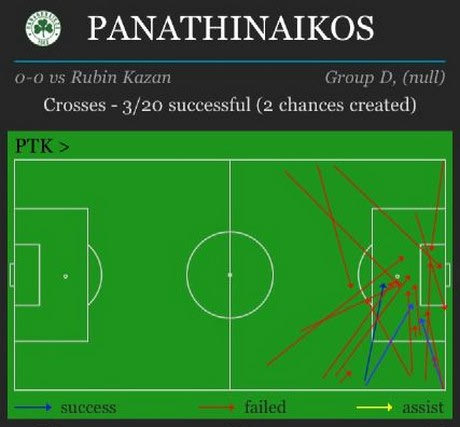
Αυτές είναι οι σέντρες που έκανε ο Παναθηναϊκός. Συνολικά 20, τρεις εκ των οποίων επιτυχημένες και δυο ευκαιρίες για τους “πράσινους”.
Το βάθος της διάταξης της Ρουμπίν περιείχε χώρους που ο Παναθηναϊκός μπορούσε να εκμεταλλευτεί, αλλά ήταν εμφανής η απουσία ενός συνδετικού κρίκου ανάμεσα στον Γάλλο επιθετικό και την υπόλοιπη ομάδα που ήταν αποκομμένη και περισσότερο επιφορτισμένη με ανασταλτικά καθήκοντα.
Η συγκέντρωση των μέσων του Παναθηναϊκού στον άξονα, άφηναν επίσης διαδρόμους στα ακραία μπακ της Καζάν να κάνουν παιχνίδι. Με τους κεντρικούς ρόλους των Γκαρθία και Καραγκούνη, οι πλάγιοι μπακ των γηπεδούχων έβγαιναν με αναλογία 2 προς 1 με τους Σπυρόπουλο και Βύντρα και έτσι οι Καντέ και Μπουμσόνγκ αναγκαζόντουσαν να ντουμπλάρουν την αναλογία βγαίνοντας να μαρκάρουν στα πλάγια εκτός περιοχής.
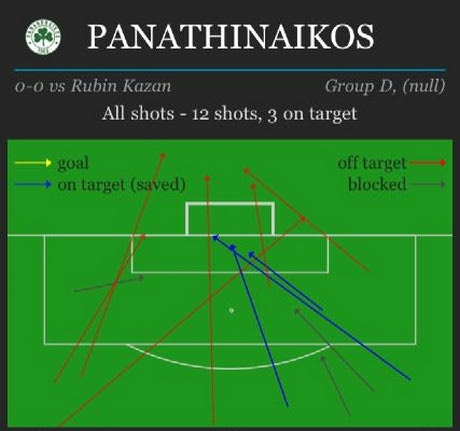
Δώδεκα σουτ έκανε ο Παναθηναϊκός, εκ των οποίων τα τρία πήγαν προς την εστία
Υπήρχε βέβαια σχέδιο για τον Κασάεβ καθώς ο Μπουμσόνγκ δεν έμενε μόνος μαζί του και τα πολλά ρήγματα που δημιούργησε στον αγώνα του ΟΑΚΑ, εδώ δεν επαναλήφθηκαν στον ίδιο βαθμό. Η αλλαγή δε του Μπουμσόνγκ με τον Μαρίνο με ταυτόχρονη μετατόπιση του Βύντρα στο κέντρο της άμυνας, έδωσε περισσότερη ευελιξία και ταχύτητα στην άμυνα του Παναθηναϊκού, ακόμα πιο συμβατή προς την επίθεση από τα άκρα της Καζάν.
Σπατάλησε ένα ημίχρονο
Το παιχνίδι άργησε να «ανοίξει». Ο Παναθηναϊκός σπατάλησε ένα ημίχρονο με την ταυτόχρονη παρουσία Ζιλμπέρτο και Σιμάο συν τους 3 στόπερ, ενώ και η Καζάν ήταν νωθρή. Στην αλλαγή ρυθμού του 2 ημιχρόνου, βοήθησε η βαθμολογική σημασία του αγώνα και οι αλλαγές.
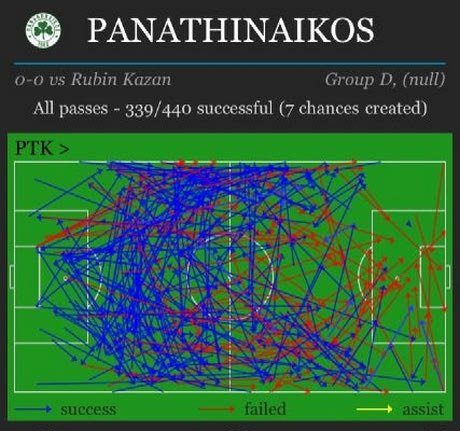
Οι πάσες του Παναθηναϊκού σε ολόκληρο το ματς. Δημιούργησε 7 προϋποθέσεις για γκολ
Ο Γκοβού, όσο και αν έχει χάσει ταχύτητα είναι πιο ταχύς από τους στατικούς Γκαρθία και Καραγκούνη, ενώ η είσοδος του Γκαραντενίζ ήταν καταλυτική για την Καζάν, καθώς δημιούργησε πολλούς κινδύνους για την «πράσινη» άμυνα.
Παρόλα αυτά, καμία ομάδα δεν έκανε αυτό που έπρεπε για να κερδίσει. Η Ρουμπίν δημιούργησε περισσότερες ευκαιρίες, αλλά τα «τελειώματα» των παικτών της ήταν άσχημα. Ο Παναθηναϊκός δεν μπόρεσε να αξιοποιήσει τον Σισέ και να έχει συνδυασμούς ανάμεσα στους παίκτες που απάρτιζαν την επιθετική τριάδα.
Έλειψαν και οι εμπνεύσεις και η καλή συνεννόηση μεταξύ τους και παρά το γεγονός ότι η Ρουμπίν είχε πάρει μέτρα στο γήπεδο όσο τέλειωνε ο χρόνος, αφήνοντας κενά στον Παναθηναϊκό, οι φιλοξενούμενοι, σπατάλησαν τις λίγες ευκαιρίες που είχαν.
English Text
Panathinaikos and Rubin Kazan served up another underwhelming 0-0, in a game neither side deserved to take the three points from.
Rubin kept their basic shape of two banks of four, with Carlos Eduardo coming in to support Sergei Kornilenko upfront. This meant that there was no place for Gokdeniz Karadeniz, who had caused Panathinaikos’ defence such problems in the first game. The dangerman Alan Kasaev started on the left wing.
Nikos Nioplias changed his system completely from the side that had contested the first three games of the Champions League. He moved Kostas Katsouranis into a more defensive role as a third centre-back alongside Cedric Kante and Jean-Alain Boumsong. This meant that the two full-backs became more attack-minded wing-backs, and rather than playing with orthodox wingers, Giorgos Karagounis and Luis Garcia drifted between wide areas and central positions depending upon the situation.
It was interesting to see Panathinaikos take the field with a back three, a system that has almost completely died out amongst top sides in European competition. The basic reason for this was the decline in the use of two-striker formations, something the back three coped with very well. There, you could have two markers in conjunction with a spare man at the back. But with 4-5-1 systems increasingly being used throughout Europe, the three-man defence found it much more difficult to adapt. In that situation, you have three defenders against one striker – fine defensively, but liable to leave you with a man less somewhere else on the pitch.
Therefore, three-man defences are best used only in certain circumstances, and teams that can shift between three- and four-man defences are particularly useful here. Otto Rehhagel is one manager who was keen to use three centre-backs when faced with two strikers, and two centre-backs when faced with one striker. That general strategy has become reasonably popular with managers who are comfortable with playing the two systems – Chile manager Marcelo Bielsa uses a 3-3-1-3 or a 4-2-1-3 on similar lines.
Therefore, the test of whether Panathinaikos’ three-man defence would work was seeing how Rubin would play – whether Carlos Eduardo would play as a second striker, and therefore fall into the hands of the centre-backs, or whether he would play in a deeper midfield position, rendering one of the centre-backs redundant. Unfortunately for Panathinaikos, and for the game as a spectable, he played the deeper role.
This meant that Panathinaikos were over-stocked in defence, with three defenders dealing with just one player, Kornilenko. The three were able to pass the ball around the back with ease, but when it came to getting the ball further up the pitch, they met problems, since there was simply one too many players defending, and one too few attacking.
The system Panathinaikos used was a fluid one, that looked like 5-4-1 when defending, 3-4-3 when attacking, and 3-6-1 when in the ‘transition’ stage. The key to this shift was the roles of the wing-backs, Nikos Spiropoulos and Loukas Vyntra. They got back level with the centre-backs when defending, but when they were on the attack, they would charge up the pitch and give Karagounis and Luis Garcia license to move forward and try and support Cisse.
What went wrong, then? In addition to the fact Panathinaikos had one too many centre-backs, they also had problems getting support to Cisse. The reason for this lies in the fact Karagounis and Garcia are not pacey or mobile enough to play the role they were asked of here. Rubin’s deep defensive line meant that the play was stretched, and there was generally too big a gap between Cisse and the rest of the side. Panathinaikos were essentially a ‘broken team’, lacking a link between the main striker and the rest fo the side.
Furthermore, when Karagounis and Luis Garcia did end up in the centre of the pitch, they opened up space on the flanks for the two Rubin full-backs to get forward and create 2 v 1 situations with the Rubin wingers against the Panathinaikos wing-backs. This meant that the two ‘outside’ centre-backs for Panathinaikos were dragged over to the flanks and often looked uncomfortable – Boumsong, in particular, is not suited to moving into wide positions, and looked nervous when he had to deal with Kasaev.
Considering Panathinaikos had more than enough defenders, they probably didn’t need to use both Gilberto Silva and Simao in front of the defence either. With Rubin’s two central midfielders playing quite deep, the two midfields essentially played in front of each other rather than looking to break forward towards goal, and it was no surprise there were few goalscoring chances.
Panathinaikos dealt well with Kasaev, who had been the most exciting player in the first match. They got men around him when the winger got the ball, and Panathinaikos were actually helped by the injury to Boumsong – it meant Marinos came on at right-wing-back and Loukas Vyntra moved in at right-centre-back, and therefore they had two mobile players to deal with Kasaev.
The game opened up late on when both sides injected some pace into the equation. Nioplias turned to Sidney Govou – not as fast as he once was, but in comparison to Garcia and Karagounis, he offered a lot more speed. For Rubin, the introduction of Karadeniz was crucial and he became the game’s key player, winning free-kicks and putting in a couple of splendid crosses that should have been converted into goals.
Ultimately, neither side did enough to win the game. Rubin created chances but they seemed to fall to the wrong players, and the finishing was poor. Panathinaikos created fewer chances because of the lack of understanding between Cisse, Karagounis and Garcia. None of these players are renowned for their vision or unselfishness, and it was very rare to see a good passing move between two of them. Too often Garcia or Cisse would try something spectacular and it would fail – and the body language between the two suggested they didn’t particularly relish playing with one another.